





Tampa Probate & Estate Planning Lawyer
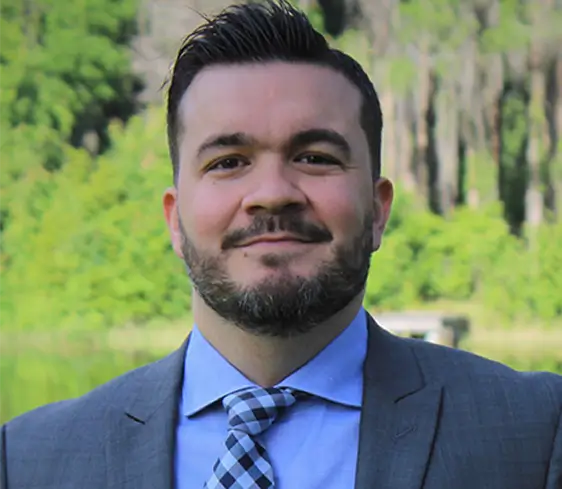
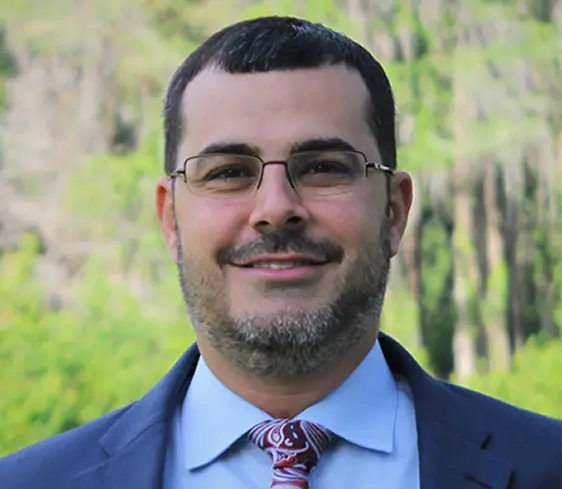
Messina Law Group, P.A. is a full-service Florida law firm started by brothers, Anthony Messina and Paul Messina, Jr. At Messina Law Group, P.A., our clients are always our priority.
Our goal is to make the legal process a smooth and easy one. We know that every situation is unique. However, we have handled thousands of cases throughout the state, and are confident we can assist you with a variety of your legal needs. Contact us for assistance with your Tampa estate planning, probate, business law, family law or real estate matter. Our experienced Tampa probate lawyers serve clients throughout Hillsborough, Pasco, and Pinellas Counties, including Wesley Chapel and the surrounding communities.
Tampa and Wesley Chapel Probate Attorneys Serving Hillsborough, Pasco, and Pinellas Counties
Probate is the court-supervised legal process of administering a deceased person’s estate. When someone passes away, their assets must be inventoried, debts paid, and remaining property distributed to beneficiaries according to their will or Florida’s intestacy laws if no valid will exists. The process can be straightforward or complex depending on the size of the estate, the clarity of estate planning documents, and whether disputes arise among family members or creditors.
Florida law requires most estates to go through probate, though certain assets like jointly held property, accounts with designated beneficiaries, and assets held in trust may pass outside the probate process. Understanding which assets require probate and which do not is essential for efficient estate administration. Our attorneys help families navigate these distinctions and develop strategies to minimize probate complexity whenever possible.
The probate process in Florida typically involves filing the will with the circuit court, appointing a personal representative to manage the estate, notifying creditors and beneficiaries, inventorying assets, paying valid debts and taxes, and distributing remaining assets according to the will or state law. Each step involves specific legal requirements and deadlines that must be carefully followed to avoid complications or personal liability for the personal representative.
Types of Probate in Florida
Florida recognizes several types of probate administration, each designed for different circumstances and estate sizes. Understanding the Florida probate rules helps families choose the most efficient path forward.
Formal administration is the standard probate process required for larger estates or when certain complications exist. This process involves court supervision throughout the administration, publication of notice to creditors, a claims period for creditors to come forward, and formal court approval of the personal representative’s actions. Formal administration typically takes six months to a year or longer to complete.
Summary administration provides a simplified process for smaller estates valued at $75,000 or less, excluding exempt property, or when the decedent has been dead for more than two years. This expedited process requires less court involvement and can often be completed more quickly than formal administration, reducing costs and delays for beneficiaries.
Disposition without administration may be available when the estate consists only of exempt property and non-exempt personal property that does not exceed the costs of final medical and funeral expenses. This streamlined approach allows families to handle small estates without formal court proceedings.
Ancillary administration becomes necessary when a Florida resident owned real property in another state or when a non-Florida resident owned real property in Florida. These proceedings coordinate with the primary probate case to transfer property located in different jurisdictions.
The Role of the Personal Representative
The personal representative, sometimes called an executor, bears significant responsibility for managing the probate process. Florida law imposes strict fiduciary duties on personal representatives, requiring them to act in the best interests of the estate and its beneficiaries. These duties include locating and securing estate assets, maintaining accurate records, filing required tax returns, paying legitimate debts, and distributing assets according to the will or Florida law.
Personal representatives can face personal liability if they fail to fulfill their duties properly. Common mistakes include distributing assets before paying all creditors, failing to provide required notices, mismanaging estate assets, or favoring certain beneficiaries over others. Having experienced legal counsel helps personal representatives avoid these pitfalls and fulfill their obligations correctly.
Our attorneys guide personal representatives through each step of the probate process, from the initial filing through final distribution. We help prepare required documents, meet court deadlines, communicate with beneficiaries and creditors, and resolve issues that arise during administration.
Probate Litigation and Estate Disputes
Unfortunately, not all probate matters proceed smoothly. Disputes can arise among family members, between beneficiaries and personal representatives, or involving creditors and other parties with claims against the estate. When conflicts cannot be resolved through negotiation, estate and trust litigation may become necessary to protect your rights and interests.
Will contests challenge the validity of a will based on grounds such as lack of testamentary capacity, undue influence, fraud, or improper execution. These cases require proving that the testator lacked the mental capacity to understand the nature and extent of their property and the effect of signing a will, or that someone improperly influenced the testator’s decisions. Will contests must typically be filed within specific time limits, making prompt legal consultation essential.
Disputes over estate administration arise when beneficiaries believe the personal representative is not fulfilling their duties properly. This may include allegations of self-dealing, failure to account for estate assets, unreasonable delays in administration, or improper distribution of assets. Beneficiaries may petition the court to compel accountings, remove personal representatives, or surcharge representatives for losses caused by their misconduct.
Creditor disputes occur when the estate or beneficiaries contest the validity or amount of claims filed against the estate. Personal representatives have a duty to investigate claims and object to those that are invalid or excessive. Our attorneys help estates evaluate creditor claims and litigate disputed claims when necessary.
Trust litigation involves disputes over the creation, administration, or interpretation of trusts. These cases may challenge the validity of a trust, seek removal of a trustee, or request court interpretation of ambiguous trust provisions. Trust litigation often involves similar issues to will contests, including allegations of incapacity, undue influence, or breach of fiduciary duty.
Elective share claims arise when a surviving spouse chooses to take a statutory share of the deceased spouse’s estate rather than the amount provided in the will. Florida’s elective share statute entitles surviving spouses to thirty percent of the elective estate, which includes certain assets that may have passed outside probate. These calculations can be complex and frequently lead to disputes.
Estate Planning Services
Thoughtful estate planning helps you protect your assets, provide for your loved ones, and ensure your wishes are honored. A comprehensive estate plan addresses what happens to your property during your lifetime if you become incapacitated and after your death. Without proper planning, state law determines how your assets are distributed, which may not align with your wishes and can create unnecessary complications for your family.
Estate planning is not just for the wealthy. Everyone can benefit from having basic documents in place that express their wishes and designate trusted individuals to make decisions on their behalf. The complexity of your estate plan should reflect your individual circumstances, family dynamics, and financial situation.
Essential Estate Planning Documents
A last will and testament is the foundation of most estate plans. Your will names a personal representative to manage your estate, designates guardians for minor children, and directs how your assets should be distributed after your death. Without a valid will, Florida’s intestacy laws determine who inherits your property, which may not reflect your intentions.
Revocable living trusts offer several advantages over wills alone. Assets held in a properly funded trust avoid probate entirely, providing privacy and potentially faster distribution to beneficiaries. Trusts also provide for management of your assets if you become incapacitated during your lifetime, avoiding the need for court-supervised guardianship. Revocable trusts can be modified or revoked during your lifetime, providing flexibility as circumstances change. Trust administration after death is typically simpler and more private than probate administration.
Durable power of attorney designates someone you trust to manage your financial affairs if you become unable to do so yourself. This document allows your agent to pay bills, manage investments, handle real estate transactions, and take other financial actions on your behalf. Without a power of attorney, your family may need to seek court appointment as guardian to manage your affairs, a time-consuming and expensive process.
Healthcare surrogate designation names someone to make medical decisions for you if you cannot make them yourself. Florida law allows your healthcare surrogate to consent to or refuse medical treatment, access your medical records, and make end-of-life decisions according to your wishes.
Living wills, also called advance directives, express your wishes regarding end-of-life medical treatment. This document tells your healthcare providers and family whether you want life-prolonging procedures if you have a terminal condition or are in a persistent vegetative state. Having a living will relieves your family of the burden of guessing what you would want in these difficult circumstances.
Advanced Estate Planning Strategies
For clients with larger estates or more complex circumstances, we offer sophisticated planning strategies to minimize taxes, protect assets, and accomplish specific goals.
Irrevocable trusts remove assets from your taxable estate and provide protection from creditors. These trusts cannot be easily modified after creation, but they offer benefits that revocable trusts cannot provide. Types of irrevocable trusts include irrevocable life insurance trusts, charitable trusts, and special needs trusts. When circumstances change, trust termination or modification may be possible under certain conditions.
Special needs trusts allow you to provide for a disabled family member without disqualifying them from government benefits like Medicaid and Supplemental Security Income. These trusts must be carefully drafted to comply with strict legal requirements while providing supplemental support for the beneficiary’s quality of life.
Charitable planning techniques allow you to support causes you care about while potentially reducing income, gift, and estate taxes. Charitable remainder trusts, charitable lead trusts, and donor-advised funds each offer different benefits depending on your goals and circumstances.
Business succession planning ensures your business continues smoothly after your retirement, disability, or death. This planning may involve buy-sell agreements, family limited partnerships, or other structures that facilitate the transfer of business interests while minimizing taxes and protecting the business from disruption.
Asset protection planning helps shield your wealth from potential creditors, lawsuits, and other threats. Florida offers significant asset protection through homestead laws, tenancy by the entirety, and certain retirement accounts and insurance products. Strategic planning can maximize these protections.
Virtual Probate and Estate Planning Services
Messina Law Group, P.A. recognizes that our clients lead busy lives and may face mobility challenges or other circumstances that make in-person meetings difficult. We offer comprehensive virtual services for both probate administration and estate planning matters, allowing you to work with our experienced attorneys from the comfort of your home or office.
Our virtual probate services include initial consultations, document review and preparation, communication with the court, and ongoing case management. Florida courts have increasingly adopted electronic filing and remote hearing procedures, making it possible to handle many probate matters without requiring clients to appear in person. We coordinate all filings and proceedings on your behalf, keeping you informed of progress through video conferences, phone calls, and secure electronic communications.
For estate planning clients, we conduct thorough consultations via video conference to understand your goals, family dynamics, and financial circumstances. We prepare customized estate planning documents and review them with you remotely, explaining each provision and answering your questions. Document execution can be coordinated through mobile notary services or at our office locations, depending on your preference.
Virtual services allow us to serve clients throughout Florida efficiently, regardless of their location. Whether you are in Wesley Chapel, Tampa, or anywhere in the state, you can access the same high-quality legal representation without the need for extensive travel.
Why Estate Planning Matters
Many people postpone estate planning, believing they are too young, do not have enough assets, or simply find the topic uncomfortable to address. However, unexpected events can occur at any age, and having proper planning in place provides protection and peace of mind for you and your family.
Without estate planning, your family may face unnecessary complications and expenses. Probate without a will takes longer and costs more than probate with a properly drafted will. Your assets may pass to people you would not have chosen, and family disputes become more likely when there is no clear expression of your wishes.
Estate planning also addresses what happens during your lifetime if you become incapacitated. Without powers of attorney and healthcare directives, your family may need to seek court appointment as guardian to make decisions on your behalf. Guardianship proceedings are public, expensive, and time-consuming, and the court may appoint someone you would not have chosen.
Having an estate plan provides certainty and reduces stress for your family during difficult times. Your loved ones will know who is in charge, what your wishes are, and how to carry them out. This clarity can prevent family conflicts and allow your family to focus on supporting each other rather than navigating legal complications.
The Role of Messina Law Group P.A.
At the forefront of probate and estate planning in Tampa and Wesley Chapel is Messina Law Group P.A., known for our expertise in these fields. With years of experience, our attorneys at Messina Law Group P.A. are well-versed in Florida’s complex legal landscape. We stand out for our personalized approach, ensuring that each client’s unique circumstances and wishes are considered and respected.
Our attorneys stay current on changes in Florida probate and estate planning law, tax regulations, and court procedures. This knowledge allows us to provide accurate, up-to-date advice and avoid potential pitfalls that could compromise your estate plan or complicate probate administration.
We work closely with other professionals, including accountants, financial advisors, and insurance professionals, to ensure your estate plan coordinates with your overall financial planning. This collaborative approach helps maximize the benefits of your planning and avoid unintended consequences.
Client-Centric Approach
Messina Law Group P.A. prides itself on a client-first philosophy. We understand the emotional and legal complexities involved in probate and estate planning and offer compassionate, individualized service. Client testimonials frequently praise our firm’s ability to simplify complex legal processes and provide peace of mind during challenging times.
We take time to listen to your concerns, understand your goals, and explain your options in plain language. Legal jargon and complex procedures can be intimidating, but we believe every client deserves to understand their situation and make informed decisions. We answer your questions thoroughly and ensure you feel comfortable with each step of the process.
Our team approach means you always have access to someone who knows your case and can assist you promptly. We maintain open lines of communication and respond to client inquiries quickly, recognizing that waiting for answers creates unnecessary stress during already difficult times.
Navigating Legal Complexities
The legal landscape of probate and estate planning in Florida can be daunting. Florida has specific rules governing wills, trusts, probate procedures, and estate taxes that differ from other states. Recent legislative changes and court decisions continually reshape this area of law, making experienced legal guidance essential.
Messina Law Group P.A. is dedicated to helping clients understand their rights and options. We ensure clients are well-informed and comfortable with each decision made, providing clarity and confidence in their estate planning choices. Whether you are creating your first will, establishing a comprehensive trust-based estate plan, or navigating probate as a personal representative or beneficiary, we provide the guidance you need.
Serving Tampa, Wesley Chapel and Surrounding Communities
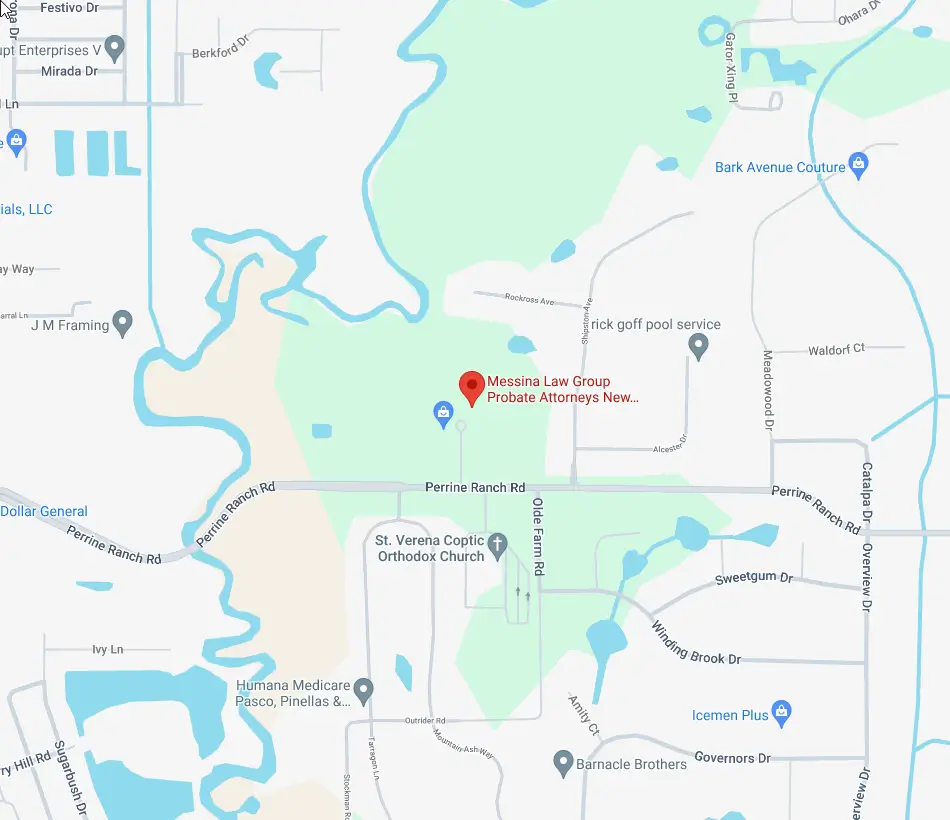
Messina Law Group P.A. proudly serves clients throughout the greater Tampa Bay region and beyond. Our practice extends throughout Hillsborough, Pasco, and Pinellas Counties, including Wesley Chapel, Carrollwood, Trinity, New Port Richey, Port Richey, Zephyrhills, Dade City, San Antonio, and St. Leo in Pasco County. We serve clients in Dunedin and Tarpon Springs in Pinellas County, as well as throughout Tampa’s diverse neighborhoods including Hyde Park, Palma Ceia, Davis Islands, Bayshore Beautiful, Beach Park, Ballast Point, Sunset Park, South Tampa, and Town ‘n’ Country. Our representation extends to the growing communities of Hunters Green, Tampa Palms, Lutz, Temple Terrace, and Valrico, ensuring families throughout the region have access to experienced probate and estate planning counsel.
Our virtual services expand our reach even further, allowing us to assist clients throughout Florida who prefer remote consultations or cannot easily travel to our offices. No matter where you are located, you can benefit from our experience and personalized approach to probate and estate planning.
Tampa Probate and Estate Planning FAQs
How long does probate take in Florida?
The timeline varies depending on the type of administration and complexity of the estate. Summary administration for smaller estates may be completed in a few weeks to a few months. Formal administration typically takes six months to a year or longer, particularly if the estate involves complex assets, creditor disputes, or litigation among beneficiaries.
Can I avoid probate in Florida?
Yes, several strategies can help assets pass outside probate. Assets held in a properly funded revocable living trust, jointly owned property with rights of survivorship, accounts with designated beneficiaries like life insurance and retirement accounts, and payable-on-death or transfer-on-death designations all avoid probate. Comprehensive estate planning can minimize or eliminate the need for probate administration.
What happens if someone dies without a will in Florida?
When someone dies without a valid will, Florida’s intestacy laws determine who inherits their property. Generally, the surviving spouse and descendants inherit the estate, with the specific shares depending on family circumstances. If there is no surviving spouse or descendants, more distant relatives may inherit. Without any identifiable heirs, the estate may eventually pass to the state.
Who can serve as personal representative in Florida?
Florida law requires personal representatives to be either a Florida resident or a spouse, sibling, parent, child, or other close relative of the decedent regardless of residency. The personal representative must also be at least 18 years old and mentally and physically capable of performing the duties. Individuals who have been convicted of a felony cannot serve as personal representative.
How much does probate cost in Florida?
Probate costs include court filing fees, publication costs for creditor notices, personal representative fees, and attorney fees. Florida law provides guidelines for reasonable attorney fees in probate matters based on the estate’s value. Additional costs may arise if the estate involves complex issues, litigation, or extensive asset management. Proper estate planning can help minimize these costs.
Do I need a lawyer for probate in Florida?
Florida law requires personal representatives to be represented by an attorney in formal administration proceedings, with limited exceptions for personal representatives who are the sole beneficiary. Even in summary administration, legal guidance helps ensure proper procedures are followed and protects personal representatives from potential liability. Attempting to navigate probate without experienced counsel often leads to costly mistakes and delays.
What is the difference between a will and a trust?
A will takes effect only after death and must go through probate to transfer assets. A trust can take effect during your lifetime, provide for asset management if you become incapacitated, and transfer assets after death without probate. Trusts offer greater privacy and flexibility but require assets to be transferred into the trust to be effective. Many estate plans use both wills and trusts together.
How often should I update my estate plan?
You should review your estate plan every three to five years and after any significant life event such as marriage, divorce, birth of children or grandchildren, death of a beneficiary or fiduciary, significant changes in assets, or moving to a new state. Tax law changes may also require updates to your planning. Regular review ensures your plan continues to reflect your wishes and takes advantage of current planning opportunities.
What is a pour-over will?
A pour-over will works in conjunction with a revocable living trust. It directs that any assets not already in your trust at death should be transferred, or poured over, into the trust for distribution according to the trust’s terms. This ensures all assets are ultimately distributed according to your trust’s provisions, even if you failed to transfer some assets during your lifetime. Assets passing through a pour-over will still require probate.
Can I contest a will in Florida?
Yes, interested parties can contest a will on grounds including lack of testamentary capacity, undue influence, fraud, duress, or improper execution. Will contests must typically be filed within specific time limits after receiving notice of administration. These cases require substantial evidence and experienced legal representation. Not everyone who is unhappy with a will has legal standing or valid grounds to contest it.
Contact Skilled Tampa Probate & Estate Planning Attorneys
Choosing the right legal partner for probate and estate planning in Tampa and Wesley Chapel is crucial. Messina Law Group P.A. offers the expertise, experience, and empathy needed to navigate these complex processes. By entrusting your estate planning to Messina Law Group P.A., you ensure that your legacy is protected and your wishes are honored.
Whether you need assistance with probate administration, are facing a probate dispute requiring litigation, or want to create or update your estate plan, our attorneys are ready to help. We offer in-person consultations at our offices as well as convenient virtual meetings for clients who prefer remote services.
Contact our Tampa probate lawyers today to take the first step towards securing your and your family’s future. Call Messina Law Group P.A. to schedule a consultation and learn how we can assist with your probate and estate planning needs.